Manufacturing Systems That Follow the Product Into Service

Enterprise systems, aftermarket service platforms, production control, and the prediction layer above them. You sell the product once. You support it for thirty years.

  • 4M+

    Assets in Scope on One OEM Platform

  • 40+

    Implementations and Upgrades

  • 700K+

    Lines of Code on One Prognostics Program

  • 2003

    In Business Since

  • ISO 9001

    and AS9100 Certified

The Aftermarket Is Where the Margin Is, and Where the Data Falls Apart

Engineering owns the design. Production owns the build. Supply chain owns the parts. Service owns everything that happens for the next three decades, which on a long-lived product is where a great deal of the lifetime revenue sits.

Those four functions rarely run on systems designed to talk to each other. So the part number in the engineering baseline is not quite the part number in the shop system, the warranty team cannot see the shop visit that would have told them the claim was valid, and the repair catalog gets maintained by hand because nobody trusts the automated version.

Downstream of that, the symptoms are familiar. Information entered more than once. Production and service teams working from different numbers. Reports assembled by hand before anyone will present them. Legacy applications left running because replacing them feels riskier than living with them. Knowledge that exists in people rather than in systems.

Everyone knows this. What makes it hard to fix is that no single system is wrong. Each one is doing its job correctly with the data it was given, and the problem lives in the space between them.

It also gets more expensive to leave alone. Every year of deferred integration adds another year of records that will have to be reconciled when somebody finally does it, and the products you shipped this year will still be in service in 2050.

That space is where we work.

From Disconnected Systems to a Connected Operation

Where most manufacturers are today

Where connected manufacturers operate

{{ r.today }}

{{ r.connected }}

What We Deliver

  • {{ pp }}

Talk to Our Manufacturing Team →

What Becomes Possible Once the Data Holds

Service data is the messiest data a manufacturer owns and the most valuable. Maintenance history written by hand at the end of a shift. Operational logs nobody opens until something fails. Parts demand that follows patterns no planner has the hours to find.

That is the material machine learning is genuinely good at. It is also the material that defeats a model trained on records nobody validated, which is why most of this work fails at the data layer rather than the algorithm.

We have been building here for years, largely because our own delivery teams needed the tools.

Prediction and Condition Monitoring

Tsunami built the offboard prognostics and health monitoring application for a fifth-generation fighter program. It processes post-flight aircraft data and returns maintenance actions in real time, using configurable algorithms that trend engine mission data to catch performance degradation before it forces a removal. The application passed 700,000 lines of code and runs in more than 120 squadron operating units worldwide.

The same discipline moves onto a shop floor. AI-DAQ, our engine test cell platform, puts an intelligence layer for anomaly detection and failure root cause analysis on top of the real-time acquisition underneath it.

Across a fleet the same work looks different. Condition-based maintenance moves an operation off a fixed interval and onto what the asset is telling you, which is a change to the maintenance program itself and not only to the analytics above it.
Parts and Repair Forecasting

Predicting what a service network will need, where, and when. The enterprise data platform described further down this page carries repair and part forecasting and utilization prediction down to the subcomponent level.

Alongside it: engine forecast and demand planning for overhaul and shop visit planning, spare-part forecasting, and supply chain demand built from component reliability performance rather than from last year's consumption.

AMP2, our maintenance packaging and monitoring application, works the same problem from the program side. It reads what your regulator-approved maintenance program requires, compares it against what your systems actually hold, and forecasts the parts cost that follows.

Technical Content and Field Support

An engineer standing at the asset needs the answer, not the library. We convert legacy technical documentation into formats that work on a mobile device in low bandwidth, and we build the electronic task cards that come out of it.

DocSurfer reads scanned certification records at better than 98% accuracy and reports which page of which file every record came from. Its machine learning layer is in active development, extending what it can read without a human first telling it where to look.

Reporting and Change Detection

The question we get asked after something goes wrong is almost always the same one. Why didn't we know something changed sooner?

Automating the report is the easy half. The useful half is catching the change before anyone thought to ask. Our change detection algorithms review operational data, separate statistically real shifts from noise, rank them by business cost, and notify as they happen.

On the prognostics program, custom report generation feeds engineering analysis directly from flight data. On a configuration audit, automated comparison of OEM source documents against paper records and the maintenance system found gaps a manual review would have taken months to reach.

Scheduling and Resource Optimization

For an airframe manufacturer we ran the analysis that optimizes cost, resource utilization and availability for maintenance scheduling against the mission parameters its fleet actually flies. We build base maintenance labor hour models that separate routine from non-routine work and expose the variability by task. Elsewhere the same methods have optimized part inventory, induction plans, and labor.

One Honest Note About All of It

The first step is not selecting an AI tool. It is establishing where the required data actually lives, whether it can be trusted, how the systems connect, and where a human has to stay in the loop.

We would rather tell you that at the start than bill you to discover it. It is also why most of the engagements on this page began somewhere smaller than the thing they became.

Talk to Our Manufacturing Team →

Four Million Assets, Tracked to the Subcomponent

  • 4M+

    Assets in scope

  • 10K+

    Events a year

  • 100+

    Airlines sending data

An aerospace component manufacturer needed to see its products in service across a customer base it did not control. Component installs and removals, repair center data, operational events, and field entries were arriving from more than a hundred airlines in different shapes and at different times.

Tsunami built the custom web application that consolidates them, exchanging data across the airframe and repair network over Spec 2000 EDI, with validation built into capture rather than applied afterward.

It carries more than four million assets in scope and more than ten thousand events a year. It tracks configuration hierarchy with verified installs and removals, service bulletin incorporation, engine maintenance and repair events including service interruptions, and utilization prediction down to the subcomponent. The forecasting and reliability analysis run on top of it.

That is what the aftermarket looks like when the data holds.

Who We Work With

Our deepest work is with aerospace and defense manufacturers: engine manufacturers, aircraft manufacturers, aerospace systems suppliers, and a defense shipbuilder where the work runs through procurement, inventory, and production material control.

We also support defense sustainment providers on Maintenix solutions, reliability reporting, hosting, and help desk, and industrial manufacturers outside aerospace on ERP consulting and reporting.

The asset management problem does not change much between an engine and a crane.

What You Should Expect From Us

The concern we hear most often is not capability. It is continuity: whether the firm that wins the work is the firm that delivers it, and whether anyone is still accountable in year three.

  • Accountable after go-live

    Managed services and production support after go-live get scoped into the engagement rather than negotiated once the implementation team has gone. Tsunami has supported enterprise systems since 2003 and holds ISO 9001 and AS9100 certification, which is the part of an answer that only means something years later.

  • Consultants from the operations they now build for

    Half the team spent 15 to 20 years in maintenance, engineering, and production leadership before joining. On an implementation that shows up as somebody saying the requirement you just wrote will not survive contact with the floor, before it gets built.

  • Scoped for defense from the start

    On defense work we are ITAR and EAR compliant, DDTC registered, and certified under the Canadian Controlled Goods Program, and a recent program audit identified no non-conformance in our software deliveries. Military sustainment carries requirements commercial manufacturing does not, and they have to be scoped from the start rather than discovered.

How Engagements Usually Begin

Talk to Our Manufacturing Team →

Most begin with a small, defined piece of work. An assessment, a proof-of-concept study, or a single workshop.

We recommend it. A proof of concept costs a fraction of an implementation and establishes whether an approach suits your operation before you commit to it. Several of the relationships on this page began that way, and it is the right shape for a first AI engagement in particular, where the honest answer about your data is worth more than a platform decision.

There is also a date worth knowing if you run aviation maintenance. Standalone IFS Maintenix reaches end of support in May 2027. Organizations still on it will need a migration path, and the ones planning now have options that the ones planning in 2027 will not.

Request an ICAM Assessment →

FAQ

  • Do you only work with aerospace manufacturers?

    No, though that is where our deepest experience sits. We support defense sustainment providers, a shipbuilder, and industrial manufacturers outside aerospace. The underlying problem, connecting engineering, production, supply chain and service data, is the same in each. It applies to any manufacturer with complex products, serialized assets, a repair operation, and a field support obligation.

  • Are you limited to one software platform?

    No. Our experience spans enterprise platforms, maintenance and engineering systems, field service applications, data and integration tools, analytics platforms and custom software, including IFS, Infor, Oracle, Microsoft, Epicor, RAMCO, AMOS, TRAX, Ultramain, NovaCura, Boomi, TIBCO, TrustFlight, CAMP Systems and Aerogility. We also bring our own methodologies and tools to whatever you already run. The right approach depends on your environment and where you intend to be in ten years, not on what we would prefer to sell.

  • We already have an ERP. Do we need to replace it?

    Usually not. A large share of this work sits around an existing platform: integrations, reporting, custom applications, and the material and production processes the standard configuration does not cover. We will tell you when a replacement is genuinely the right answer, and when it is not.

  • Can you take on one workstream rather than a whole program?

    Yes. We can lead an end-to-end implementation or run a single piece: data migration, integrations, custom development, testing, training, reporting, upgrades, or post-go-live support.

  • Can you modernize a custom or legacy application?

    Yes. We assess what is there and then extend its life, re-platform it, replace selected components, integrate it with newer systems, or build its replacement. Which of those is right depends on what the application is actually costing you, and that is usually the first thing worth measuring.

  • What do you mean by AI, specifically?

    Applied machine learning and analytics against operational data, not a chatbot bolted onto a website. In practice that means prognostics and condition monitoring, demand and repair forecasting, anomaly and change detection, and document extraction from scanned records. Each of those is running in production somewhere in our portfolio today. Where a model is not the right answer, we will say so.

  • What is MES, and where does it sit against ERP and EAM?

    A Manufacturing Execution System runs the work on the floor: sequencing, execution, and production data capture. ERP, Enterprise Resource Planning, runs the business transaction layer above it. EAM, Enterprise Asset Management, runs the assets themselves through their life. Most manufacturers own all three and the value is usually in the interfaces between them rather than in any one of them.

  • What is CRIM?

    Custom Reports, Integrations and Modifications. It covers reporting built to your specification, interfaces between systems that need to share data, and modifications that close the gap between standard platform functionality and how your operation actually runs.

  • Can you support defense programs?

    Yes. Tsunami has worked on United States defense sustainment including fifth-generation fighter prognostics software, and we are ITAR and EAR compliant and DDTC registered. Defense work carries requirements commercial manufacturing does not, and we scope for them from the beginning.

  • Who is accountable after go-live?

    We are. Managed services and production support get scoped into the engagement rather than negotiated once the implementation team has left, and the consultants who deliver the work are the ones who support it.

Where Does Your Data Break?

Tell us where it breaks between your build and your aftermarket, or what your service business cannot currently see. You will speak with someone who has built the fix before.

Speak to an Expert

Manufacturing Systems That Follow the Product Into Service

Enterprise systems, aftermarket service platforms, production control, and the prediction layer above them. You sell the product once. You support it for thirty years.

  • 4M+

    Assets in Scope on One OEM Platform

  • 40+

    Implementations and Upgrades

  • 700K+

    Lines of Code on One Prognostics Program

  • 2003

    In Business Since

  • ISO 9001

    and AS9100 Certified

The Aftermarket Is Where the Margin Is, and Where the Data Falls Apart

Engineering owns the design. Production owns the build. Supply chain owns the parts. Service owns everything that happens for the next three decades, which on a long-lived product is where a great deal of the lifetime revenue sits.

Those four functions rarely run on systems designed to talk to each other. So the part number in the engineering baseline is not quite the part number in the shop system, the warranty team cannot see the shop visit that would have told them the claim was valid, and the repair catalog gets maintained by hand because nobody trusts the automated version.

Downstream of that, the symptoms are familiar. Information entered more than once. Production and service teams working from different numbers. Reports assembled by hand before anyone will present them. Legacy applications left running because replacing them feels riskier than living with them. Knowledge that exists in people rather than in systems.

Everyone knows this. What makes it hard to fix is that no single system is wrong. Each one is doing its job correctly with the data it was given, and the problem lives in the space between them.

It also gets more expensive to leave alone. Every year of deferred integration adds another year of records that will have to be reconciled when somebody finally does it, and the products you shipped this year will still be in service in 2050.

That space is where we work.

From Disconnected Systems to a Connected Operation

Where most manufacturers are today

Where connected manufacturers operate

ERP, MES, maintenance and quality systems running independently

Integrated systems supporting one set of business processes

Data moved between them by hand

Governed data moving through defined interfaces

Aging custom applications holding up critical processes

Current applications carrying the critical workflows

Reports assembled from several sources before anyone trusts them

Operational reporting that is current without a reconciliation step

Limited visibility across production and service

Production, service, inventory and quality information connected

Upgrades deferred because the operational risk is real

A structured upgrade path instead of a deferred one

Process knowledge living in people rather than systems

Process embedded in the system, so it survives turnover

What We Deliver

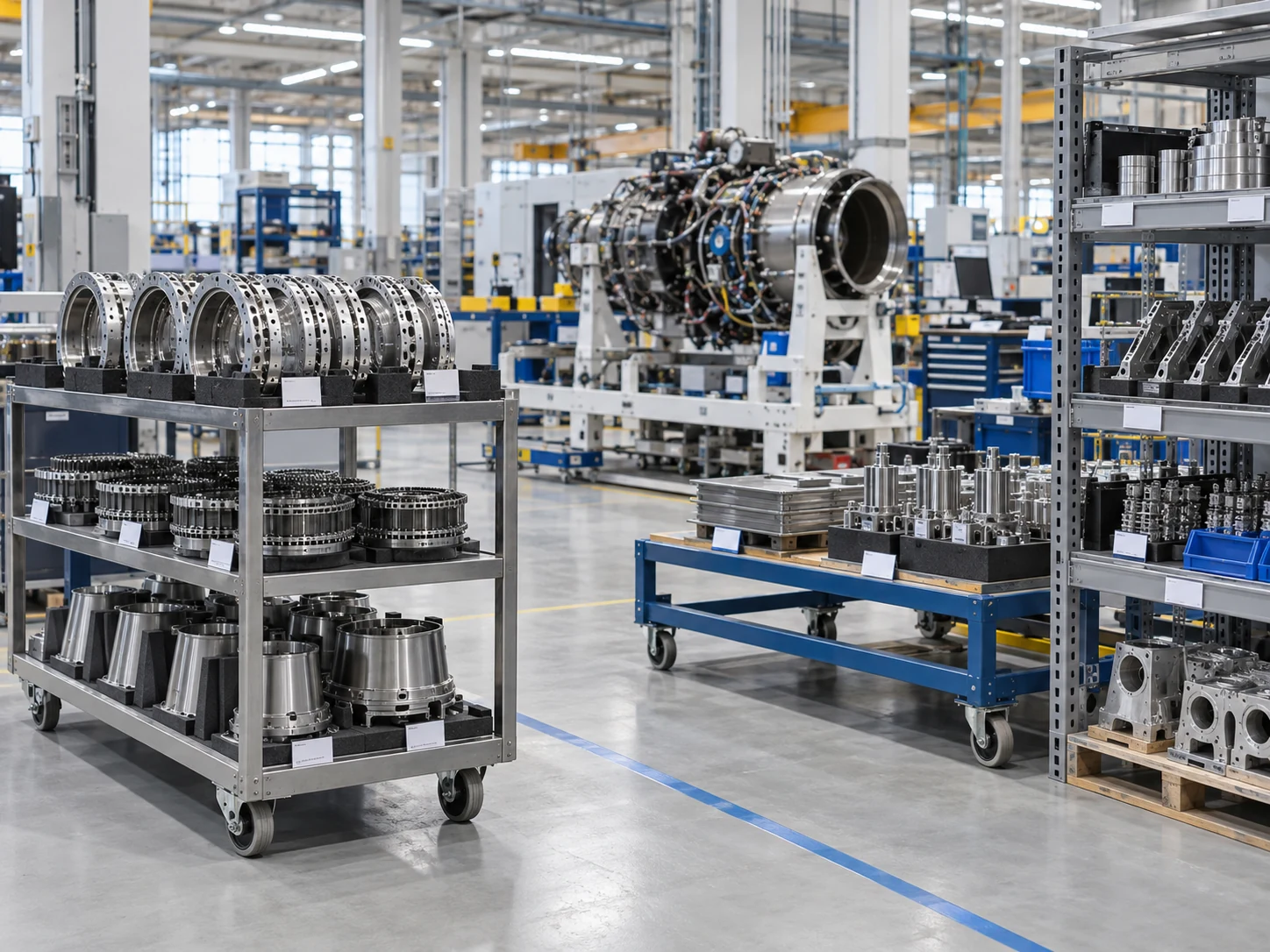
Machined engine components staged on labelled carts and racks in front of an engine build stand
  • Part numbers reconciled across the engineering baseline and the shop floor. Shop-visit data made visible to the warranty team while a claim is still open. Repair catalogs fed from the source instead of maintained by hand. This is unglamorous work with no launch event, and it is what makes everything below it worth doing.

  • Engine and component maintenance applications, shop-visit analytics, repair catalogs, warranty processing, invoicing, supplier management, technical publications, and asset records.

    At one aerospace manufacturer this has run across the full aftermarket environment for years, over hundreds of projects, connecting engineering, maintenance, supply chain, commercial and operational data that had been sitting in separate systems.

    That is the part worth noticing. Not one platform decision, but years of work on the same environment, which is the only way anybody learns where a service business actually loses money.

  • We have taken an aircraft manufacturer through the entire arc: technical publications, data migration, integrations, training, testing, hypercare, and the stabilization period afterward that most implementation partners treat as somebody else's problem.

  • Reservation logic, free-standing material processes, skip-lot inspection, and material tracking through production, alongside the custom reports and modifications a production environment always needs.

    This work sits closest to the floor and it is unforgiving. If the system says the material is there and it is not, the schedule moves.

  • We build the reliability applications, operational dashboards, supply-chain systems, purchase-order databases, and material-history reporting that close that gap.

    We build the management layer above it as well: financial and supply dashboards, and in one case a project and program management tool taken from concept to working product because nothing on the market fitted how the operation ran.

  • We run solution architecture advisory, proof-of-concept studies, and assessments for manufacturers weighing how to modernize an MRO operation.

    It is often where a relationship starts.

What Becomes Possible Once the Data Holds

Service data is the messiest data a manufacturer owns and the most valuable. Maintenance history written by hand at the end of a shift. Operational logs nobody opens until something fails. Parts demand that follows patterns no planner has the hours to find.

That is the material machine learning is genuinely good at. It is also the material that defeats a model trained on records nobody validated, which is why most of this work fails at the data layer rather than the algorithm.

We have been building here for years, largely because our own delivery teams needed the tools.

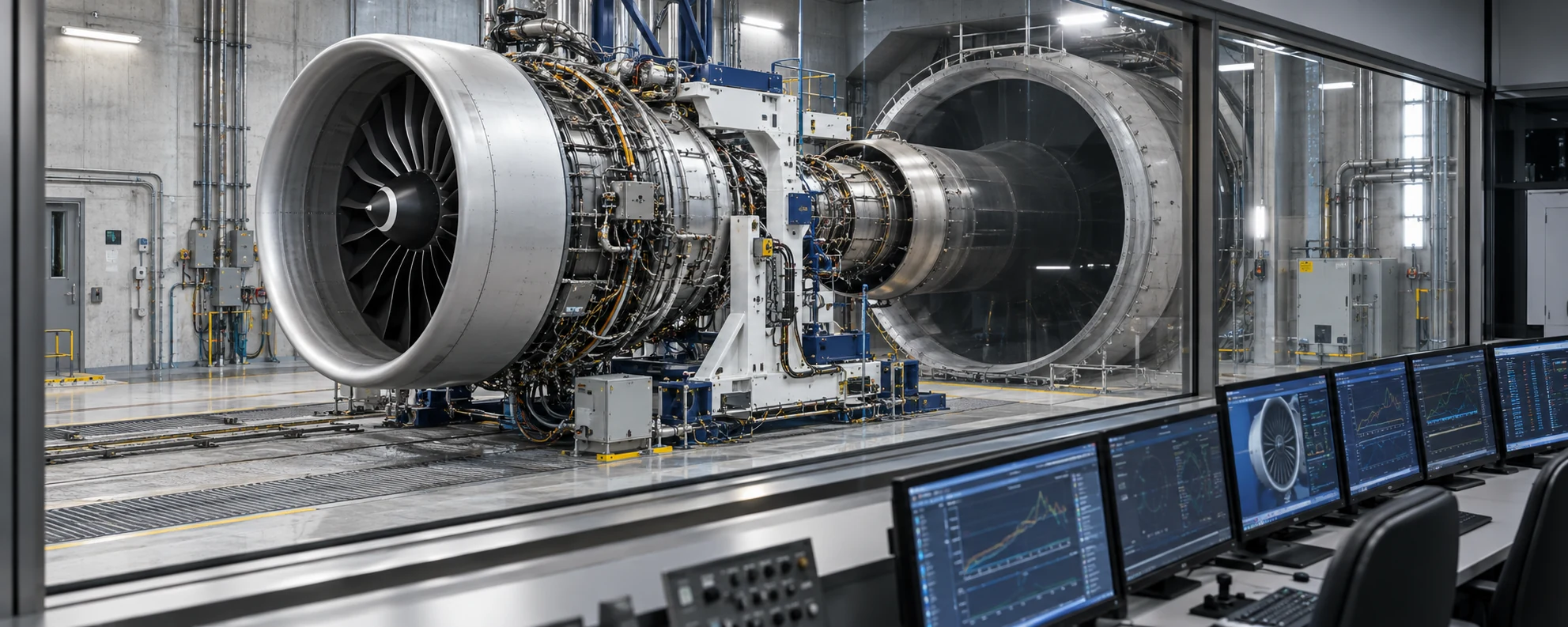
Turbofan engine in a test cell seen from the control room, with monitoring screens in the foreground

Prediction and Condition Monitoring

Tsunami built the offboard prognostics and health monitoring application for a fifth-generation fighter program. It processes post-flight aircraft data and returns maintenance actions in real time, using configurable algorithms that trend engine mission data to catch performance degradation before it forces a removal. The application passed 700,000 lines of code and runs in more than 120 squadron operating units worldwide.

The same discipline moves onto a shop floor. AI-DAQ, our engine test cell platform, puts an intelligence layer for anomaly detection and failure root cause analysis on top of the real-time acquisition underneath it.

Across a fleet the same work looks different. Condition-based maintenance moves an operation off a fixed interval and onto what the asset is telling you, which is a change to the maintenance program itself and not only to the analytics above it.
Parts and Repair Forecasting

Predicting what a service network will need, where, and when. The enterprise data platform described further down this page carries repair and part forecasting and utilization prediction down to the subcomponent level.

Alongside it: engine forecast and demand planning for overhaul and shop visit planning, spare-part forecasting, and supply chain demand built from component reliability performance rather than from last year's consumption.

AMP2, our maintenance packaging and monitoring application, works the same problem from the program side. It reads what your regulator-approved maintenance program requires, compares it against what your systems actually hold, and forecasts the parts cost that follows.

Technical Content and Field Support

An engineer standing at the asset needs the answer, not the library. We convert legacy technical documentation into formats that work on a mobile device in low bandwidth, and we build the electronic task cards that come out of it.

DocSurfer reads scanned certification records at better than 98% accuracy and reports which page of which file every record came from. Its machine learning layer is in active development, extending what it can read without a human first telling it where to look.

Reporting and Change Detection

The question we get asked after something goes wrong is almost always the same one. Why didn't we know something changed sooner?

Automating the report is the easy half. The useful half is catching the change before anyone thought to ask. Our change detection algorithms review operational data, separate statistically real shifts from noise, rank them by business cost, and notify as they happen.

On the prognostics program, custom report generation feeds engineering analysis directly from flight data. On a configuration audit, automated comparison of OEM source documents against paper records and the maintenance system found gaps a manual review would have taken months to reach.

Scheduling and Resource Optimization

For an airframe manufacturer we ran the analysis that optimizes cost, resource utilization and availability for maintenance scheduling against the mission parameters its fleet actually flies. We build base maintenance labor hour models that separate routine from non-routine work and expose the variability by task. Elsewhere the same methods have optimized part inventory, induction plans, and labor.

One Honest Note About All of It

The first step is not selecting an AI tool. It is establishing where the required data actually lives, whether it can be trusted, how the systems connect, and where a human has to stay in the loop.

We would rather tell you that at the start than bill you to discover it. It is also why most of the engagements on this page began somewhere smaller than the thing they became.

Talk to Our Manufacturing Team →

Four Million Assets, Tracked to the Subcomponent

  • 4M+

    Assets in scope

  • 10K+

    Events a year

  • 100+

    Airlines sending data

An aerospace component manufacturer needed to see its products in service across a customer base it did not control. Component installs and removals, repair center data, operational events, and field entries were arriving from more than a hundred airlines in different shapes and at different times.

Tsunami built the custom web application that consolidates them, exchanging data across the airframe and repair network over Spec 2000 EDI, with validation built into capture rather than applied afterward.

It carries more than four million assets in scope and more than ten thousand events a year. It tracks configuration hierarchy with verified installs and removals, service bulletin incorporation, engine maintenance and repair events including service interruptions, and utilization prediction down to the subcomponent. The forecasting and reliability analysis run on top of it.

That is what the aftermarket looks like when the data holds.

Who We Work With

Our deepest work is with aerospace and defense manufacturers: engine manufacturers, aircraft manufacturers, aerospace systems suppliers, and a defense shipbuilder where the work runs through procurement, inventory, and production material control.

We also support defense sustainment providers on Maintenix solutions, reliability reporting, hosting, and help desk, and industrial manufacturers outside aerospace on ERP consulting and reporting.

The asset management problem does not change much between an engine and a crane.

What You Should Expect From Us

The concern we hear most often is not capability. It is continuity: whether the firm that wins the work is the firm that delivers it, and whether anyone is still accountable in year three.

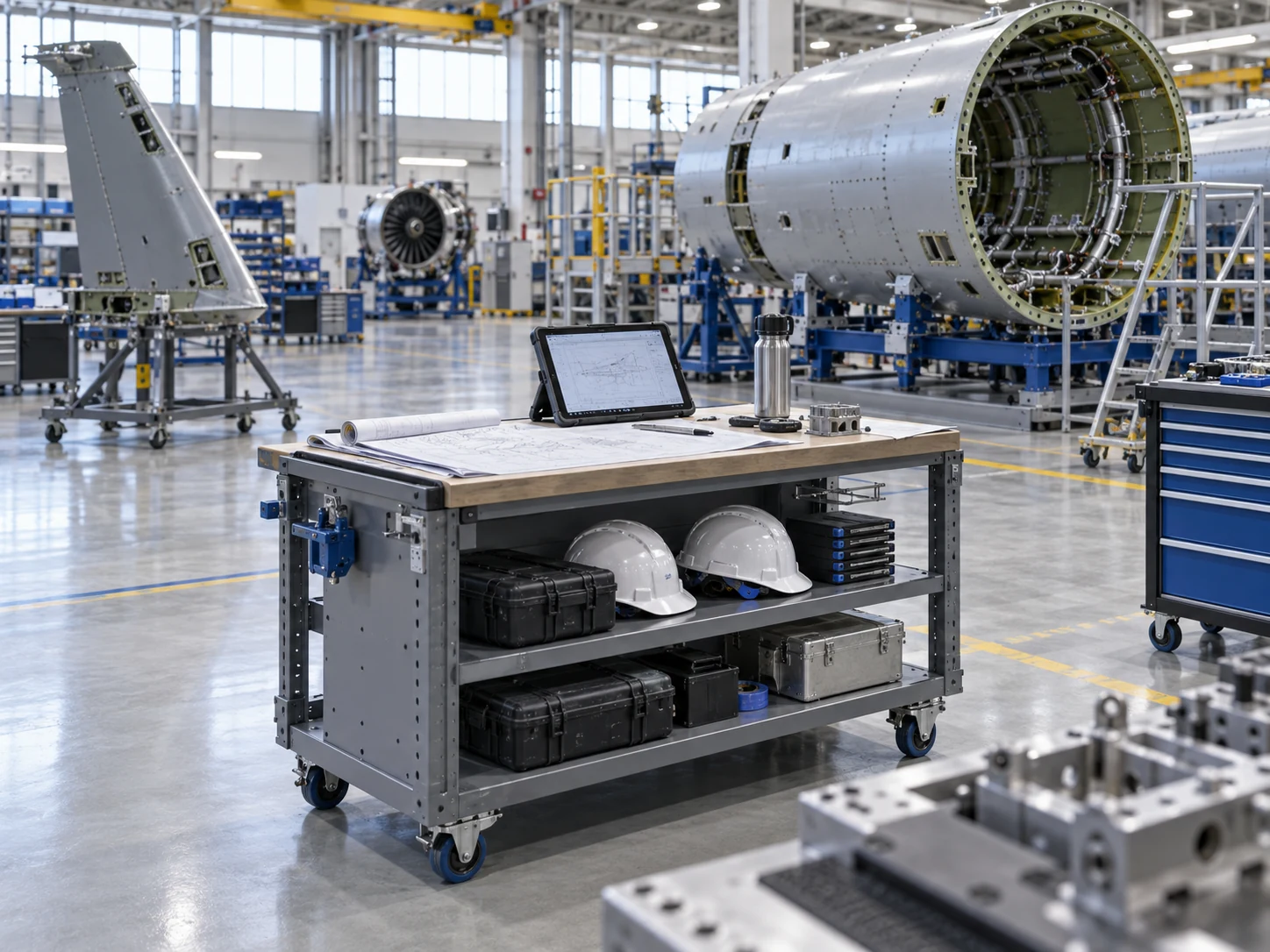
Shop floor work cart with drawings and tablet in front of an engine nacelle and fin section
  • Accountable after go-live

    Managed services and production support after go-live get scoped into the engagement rather than negotiated once the implementation team has gone. Tsunami has supported enterprise systems since 2003 and holds ISO 9001 and AS9100 certification, which is the part of an answer that only means something years later.

  • Consultants from the operations they now build for

    Half the team spent 15 to 20 years in maintenance, engineering, and production leadership before joining. On an implementation that shows up as somebody saying the requirement you just wrote will not survive contact with the floor, before it gets built.

  • Scoped for defense from the start

    On defense work we are ITAR and EAR compliant, DDTC registered, and certified under the Canadian Controlled Goods Program, and a recent program audit identified no non-conformance in our software deliveries. Military sustainment carries requirements commercial manufacturing does not, and they have to be scoped from the start rather than discovered.

How Engagements Usually Begin

Talk to Our Manufacturing Team →

Most begin with a small, defined piece of work. An assessment, a proof-of-concept study, or a single workshop.

We recommend it. A proof of concept costs a fraction of an implementation and establishes whether an approach suits your operation before you commit to it. Several of the relationships on this page began that way, and it is the right shape for a first AI engagement in particular, where the honest answer about your data is worth more than a platform decision.

There is also a date worth knowing if you run aviation maintenance. Standalone IFS Maintenix reaches end of support in May 2027. Organizations still on it will need a migration path, and the ones planning now have options that the ones planning in 2027 will not.

Request an ICAM Assessment →

FAQ

  • Do you only work with aerospace manufacturers?

    No, though that is where our deepest experience sits. We support defense sustainment providers, a shipbuilder, and industrial manufacturers outside aerospace. The underlying problem, connecting engineering, production, supply chain and service data, is the same in each. It applies to any manufacturer with complex products, serialized assets, a repair operation, and a field support obligation.

  • Are you limited to one software platform?

    No. Our experience spans enterprise platforms, maintenance and engineering systems, field service applications, data and integration tools, analytics platforms and custom software, including IFS, Infor, Oracle, Microsoft, Epicor, RAMCO, AMOS, TRAX, Ultramain, NovaCura, Boomi, TIBCO, TrustFlight, CAMP Systems and Aerogility. We also bring our own methodologies and tools to whatever you already run. The right approach depends on your environment and where you intend to be in ten years, not on what we would prefer to sell.

  • We already have an ERP. Do we need to replace it?

    Usually not. A large share of this work sits around an existing platform: integrations, reporting, custom applications, and the material and production processes the standard configuration does not cover. We will tell you when a replacement is genuinely the right answer, and when it is not.

  • Can you take on one workstream rather than a whole program?

    Yes. We can lead an end-to-end implementation or run a single piece: data migration, integrations, custom development, testing, training, reporting, upgrades, or post-go-live support.

  • Can you modernize a custom or legacy application?

    Yes. We assess what is there and then extend its life, re-platform it, replace selected components, integrate it with newer systems, or build its replacement. Which of those is right depends on what the application is actually costing you, and that is usually the first thing worth measuring.

  • What do you mean by AI, specifically?

    Applied machine learning and analytics against operational data, not a chatbot bolted onto a website. In practice that means prognostics and condition monitoring, demand and repair forecasting, anomaly and change detection, and document extraction from scanned records. Each of those is running in production somewhere in our portfolio today. Where a model is not the right answer, we will say so.

  • What is MES, and where does it sit against ERP and EAM?

    A Manufacturing Execution System runs the work on the floor: sequencing, execution, and production data capture. ERP, Enterprise Resource Planning, runs the business transaction layer above it. EAM, Enterprise Asset Management, runs the assets themselves through their life. Most manufacturers own all three and the value is usually in the interfaces between them rather than in any one of them.

  • What is CRIM?

    Custom Reports, Integrations and Modifications. It covers reporting built to your specification, interfaces between systems that need to share data, and modifications that close the gap between standard platform functionality and how your operation actually runs.

  • Can you support defense programs?

    Yes. Tsunami has worked on United States defense sustainment including fifth-generation fighter prognostics software, and we are ITAR and EAR compliant and DDTC registered. Defense work carries requirements commercial manufacturing does not, and we scope for them from the beginning.

  • Who is accountable after go-live?

    We are. Managed services and production support get scoped into the engagement rather than negotiated once the implementation team has left, and the consultants who deliver the work are the ones who support it.

Where Does Your Data Break?

Tell us where it breaks between your build and your aftermarket, or what your service business cannot currently see. You will speak with someone who has built the fix before.